
Recent Publications
Sex hormone profiles and ACL injury - It’s time for study designs to match the complexity of the problem
Sport's Health: A Multidisciplinary Approach.
Reproductive hormones have long been considered a key risk factor for a woman’s greater susceptibility to anterior cruciate ligament (ACL) injury. However, there is a lack of clarity in how menstrual cycle phases and precision in how hormone profiles are estimated. This editorial serves as a call to action to move beyond general associations if we are to understand the specific hormones and interactions that impact muscle and ligament development and injury risk.
Anterior knee laxity is greater in athletic females who attain menarche at a younger age
Knee Surgery Sports Traumatology Arthroscopy
ACL injuries are rare in women before 12 years of age, then rise rapidly until they peak at 16-17 years of age. Estrogen exposure can vary substantially during this time, both at the age a girl reaches menarche, and the time it takes for a young girl to establish normal, ovulatory cycles. This study examined how age of menarche, and the years since menarche were associated with a female athlete’s knee laxity a known risk factor for ACL injury.
Pediatric ACL: We need to do better for our most vulnerable patients
Journal of Athletic Training. Special Issue on ACL Injury in the Pediatric Athlete
An increasing number of younger patients are being diagnosed with an ACL injury and having reconstructive surgery. Such trends are particularly concerning for adolescent girls, who are more likely to injure their ACL earlier in life, and subsequently more likely to suffer a secondary ACL injury and injury-related disability early in the lifespan. Despite these concerning trends, the majority of research has focused on adult populations and patients. We need to do better for our most vulnerable patients.
Sex-specific changes in physical risk factors for anterior cruciate ligament injury by chronological age and stages of growth and maturation from 8 to 18 years of age
Journal of Athletic Training. Special Issue on ACL Injury in the Pediatric Athlete
During adolescence (a time of rapid growth and development) sex specific changes in physical characteristics begin to emerge that have been implicated in a greater risk for ACL injury in girls and women. This systematic review examined the development of these sex-specific trajectories over time based on chronological age, stages of growth, and maturity, and how they changed relative to one another both within and between sexes.
Quadriceps muscle volume positively contributes to ACL volume
Special Issue: Optimizing Outcomes after ACL Injury in Athletes. Journal of Orthopaedic Research
During adolescence (a time of rapid growth and development) sex specific changes in physical characteristics begin to emerge that have been implicated in a greater risk for ACL injury in girls and women. This systematic review examined the development of these sex-specific trajectories over time based on chronological age, stages of growth, and maturity, and how they changed relative to one another both within and between sexes.
The relationship of ACL volume and T2 relaxation times to anterior knee laxity
Orthopaedic Journal of Sports Medicine.
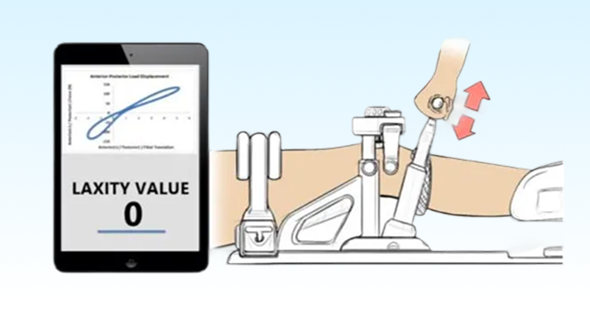
A clinical knee arthrometer is commonly used to assess the integrity of the ACL for diagnostic and screening purposes. However, the structural properties that contribute to anterior knee laxity are not well understood. The results of this MRI-based study indicate that anterior knee laxity was largely predicted by the size of the ACL size and to a lesser extent ACL tissue quality, suggesting that those who have greater anterior knee laxity have smaller and structurally weaker ligaments. These findings support the use of cost-effective and clinically accessible measures of knee laxity to gain clinical insights into the structural quality of the ACL and potential injury risk.